I aten't dead! I have been flat for the last two days and would have continued the practice except for No Kings, but since it turned out the nearest rally was a grand total of ten minutes from my house I walked them to practice my democratically rightful freedom of assembly in the brightly freezing afternoon and was rewarded with the unexpected company of a long-time and little-seen friend who is not on DW and some excellent signs and costumes, of which I confess myself the most impressed by the inflatable riding frog. It was one of a small party on the lesser island of the rotary which included an impressively starred-and-striped Uncle Sam and an otherwise normally dressed protester wearing an American flag top hat. I suspect these rallies of being the one context nowadays in which I do not side-eye the deployment of traditional patriotic imagery. The larger island hosted a solo and determined Make Orwell Fiction Again. I had a chance to compliment the sign against The Lyin King whose black-on-red silhouetting had gone particularly doom metal in the execution, like a kind of psychedelic death's-head poppy. A woman whose jacket was embroidered with dragons and her pants with forests carried signs for herself and her artistically antifascist high-schooler. We had no signs of our own—I said that I was queer and here and that was about what I was up for—but were welcomed onto the curb to wave at the traffic, standing next to No War in Iran. The drive-by honking was heartening and considerable. I felt prudent to have brought earplugs. The crowd meanwhile went wild for the SUV from Cambridge Immigration Law. Making eye contact with passengers and drivers who waved back or thumbs-upped felt as useful as the presence or the noise, especially when it was someone with a headscarf or visibly non-white. The Amazon driver absolutely leaned on the horn as they went through. We were a comparatively small group, but I was not physically capable of getting myself to Boston Common and glad to have been able to demonstrate at all. I want it to mean something beyond the carnival of free expression, although the free expression should not be taken for granted: just around this time of last year was the abduction of Rümeysa Öztürk. I am going to eat some chopped liver on a challah roll and return to irregularly scheduled flatness.


The train bears ![[personal profile]](https://www.dreamwidth.org/img/silk/identity/user.png) selkie southward again: we have affirmed that the important part is not the leaving, but the coming back. This visit was somewhat more flying than usual and complicated by just about everyone on both sides having run out of running on fumes some time last year if not the previous decade, but we had celebration and I was finally able to give her the shells and stones I had collected for her five months ago on Cape Cod, reminders of northern Atlantic. spatch and I have decided never again to pay attention to his phone when driving into Brookline. Making our way home from South Station, I was so pleased to see that the superstructure of the Northern Avenue Bridge has not yet been demolished and still stands as an installation of rust-flaked trusses, permanently perpendicular to its successor's flat concrete. What I would have called the new North Washington Street Bridge has been designated the Bill Russell Bridge since I first glimpsed it in miniature of the Zakim, a parabolic stickleback of white fish bones. We parked in the lot of Bill & Bob's for the first roast beef sandwiches of the season, so early the picnic tables had not been set up, and were introduced by WERS to the total delight of They Might Be Giants' "Wu-Tang" (2026) as we wound past the un-iced Mystic. Two days after a snow that stuck to all the branches, it is short-sleeved catkin spring, drive-with-the-windows-down weather. We watched the Charles and the Fort Point Channel scatter the same reflective blue as the sky.
selkie southward again: we have affirmed that the important part is not the leaving, but the coming back. This visit was somewhat more flying than usual and complicated by just about everyone on both sides having run out of running on fumes some time last year if not the previous decade, but we had celebration and I was finally able to give her the shells and stones I had collected for her five months ago on Cape Cod, reminders of northern Atlantic. spatch and I have decided never again to pay attention to his phone when driving into Brookline. Making our way home from South Station, I was so pleased to see that the superstructure of the Northern Avenue Bridge has not yet been demolished and still stands as an installation of rust-flaked trusses, permanently perpendicular to its successor's flat concrete. What I would have called the new North Washington Street Bridge has been designated the Bill Russell Bridge since I first glimpsed it in miniature of the Zakim, a parabolic stickleback of white fish bones. We parked in the lot of Bill & Bob's for the first roast beef sandwiches of the season, so early the picnic tables had not been set up, and were introduced by WERS to the total delight of They Might Be Giants' "Wu-Tang" (2026) as we wound past the un-iced Mystic. Two days after a snow that stuck to all the branches, it is short-sleeved catkin spring, drive-with-the-windows-down weather. We watched the Charles and the Fort Point Channel scatter the same reflective blue as the sky.
selkie southward again: we have affirmed that the important part is not the leaving, but the coming back. This visit was somewhat more flying than usual and complicated by just about everyone on both sides having run out of running on fumes some time last year if not the previous decade, but we had celebration and I was finally able to give her the shells and stones I had collected for her five months ago on Cape Cod, reminders of northern Atlantic. spatch and I have decided never again to pay attention to his phone when driving into Brookline. Making our way home from South Station, I was so pleased to see that the superstructure of the Northern Avenue Bridge has not yet been demolished and still stands as an installation of rust-flaked trusses, permanently perpendicular to its successor's flat concrete. What I would have called the new North Washington Street Bridge has been designated the Bill Russell Bridge since I first glimpsed it in miniature of the Zakim, a parabolic stickleback of white fish bones. We parked in the lot of Bill & Bob's for the first roast beef sandwiches of the season, so early the picnic tables had not been set up, and were introduced by WERS to the total delight of They Might Be Giants' "Wu-Tang" (2026) as we wound past the un-iced Mystic. Two days after a snow that stuck to all the branches, it is short-sleeved catkin spring, drive-with-the-windows-down weather. We watched the Charles and the Fort Point Channel scatter the same reflective blue as the sky.My poem "ἀγκυλοθάλασσος" has been accepted by Strange Horizons. I am indebted to radiantfracture for his Twine prompt generator designed to produce scientific-sounding compound adjectives and nouns, in this case the irresistible "ankylothalassic" from ἀγκύλος "crooked, bent" and θάλασσα "the sea." I rendered it back into classical Greek and José Esteban Muñoz and Twelfth Night got in there along the way. It was written on New Year's Eve.
While I was out of ambit of the internet for almost all of yesterday, Reckoning: It Was Paradise hit the digital shelves. It is the special issue of the journal of environmental justice on war and conflict and contains a poem of mine which will go live on the internet in a month, or you could pick it up now with the rest of the shatteringly topical e-book if you don't feel like preordering it in print. I wrote it last summer after the—first—U.S. strikes on Iran. I taught myself a small amount of Elamite cuneiform for it. It should not have come around to such relevance again.
The designer of the Paleontological Research Institute's long-running pre-saurian Paleozoic Pals has just branched out into Pleistocene mammals with a Kickstarter for Cenozoic Snuggles. I have put in for a Glyptodon.
I may have slept nine hours. I just heard Rabbitology's "The Bog Bodies" (2026).
radiantfracture for his Twine prompt generator designed to produce scientific-sounding compound adjectives and nouns, in this case the irresistible "ankylothalassic" from ἀγκύλος "crooked, bent" and θάλασσα "the sea." I rendered it back into classical Greek and José Esteban Muñoz and Twelfth Night got in there along the way. It was written on New Year's Eve.While I was out of ambit of the internet for almost all of yesterday, Reckoning: It Was Paradise hit the digital shelves. It is the special issue of the journal of environmental justice on war and conflict and contains a poem of mine which will go live on the internet in a month, or you could pick it up now with the rest of the shatteringly topical e-book if you don't feel like preordering it in print. I wrote it last summer after the—first—U.S. strikes on Iran. I taught myself a small amount of Elamite cuneiform for it. It should not have come around to such relevance again.
The designer of the Paleontological Research Institute's long-running pre-saurian Paleozoic Pals has just branched out into Pleistocene mammals with a Kickstarter for Cenozoic Snuggles. I have put in for a Glyptodon.
I may have slept nine hours. I just heard Rabbitology's "The Bog Bodies" (2026).
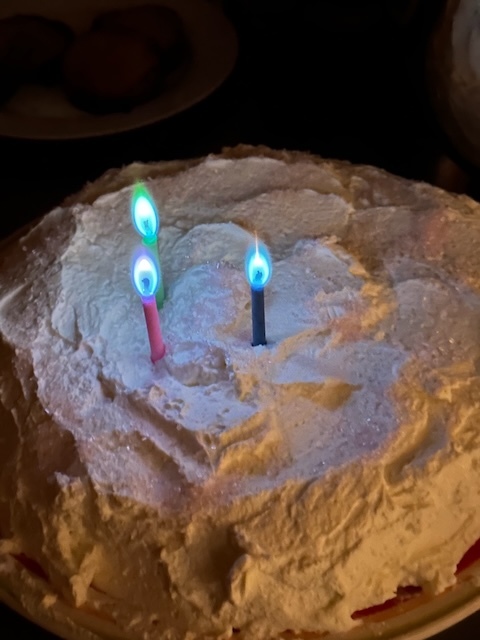
selkie's birthday was duly observed with my parents and my husbands, a meal of much carnivory, and an apricot marmalade cake doused in whipped cream, strawberry sugar, and candles that burned like driftwood salts. Many deeply goofy photos were taken of various combinations of us. So much is wrong with the world and it is still true that my family for an evening is happy. A photogenic snow began to drift the streets as I drove everyone home.
I must have slept ten hours. Hestia appears to be watching the rain with almost as much interest as the birds sheltering from it. May it and the recent snowmelt amend the drought. Tomorrow, of course, it is forecast to snow again.
selkie was safely collected from the Penn Station-alike that South Station has done its best to inhume itself into since her last visit, provided with an appropriate quantity of local barbecue for an obligate carnivore, and even successfully checked in to her hotel despite the mishegos attending every stage of her conference even before it started. At no point in this process did we apparently remember to take any pictures of ourselves.
My dreams seem to be branching out in terms of media, since last night's featured a youngish Alec McCowen starring in the radio version of a Tey-like crime novel as the ambiguously poor relation of an upper-class family who is not actually Kind Hearts and Coronets-ing his way through them, but needs to figure out who is before he's so handily scapegoated for the accidents escalating to murder ever since his arrival; he is, naturally, keeping a secret from the family, the authorities, and even the inattentive reader, but it isn't that. I was very pleased to find that a recording had survived, because the original novel had just been reprinted by the British Library Crime Classics. There were images mixed up in it in the way of dreams, but it was definitely on the Internet Archive.
Outside my head, I have been recently listening to Wu Fei & Abigail Washburn (2020), Jake Blount and Mali Obomsawin's symbiont (2024), and Huw Marc Bennett's Heol Las (2026), which I found through its ghost-boxish "Cân Gwasael (Wassail Song)." I like that I do not have to dream their remixes of folk and futurism and time.
selkie was safely collected from the Penn Station-alike that South Station has done its best to inhume itself into since her last visit, provided with an appropriate quantity of local barbecue for an obligate carnivore, and even successfully checked in to her hotel despite the mishegos attending every stage of her conference even before it started. At no point in this process did we apparently remember to take any pictures of ourselves.My dreams seem to be branching out in terms of media, since last night's featured a youngish Alec McCowen starring in the radio version of a Tey-like crime novel as the ambiguously poor relation of an upper-class family who is not actually Kind Hearts and Coronets-ing his way through them, but needs to figure out who is before he's so handily scapegoated for the accidents escalating to murder ever since his arrival; he is, naturally, keeping a secret from the family, the authorities, and even the inattentive reader, but it isn't that. I was very pleased to find that a recording had survived, because the original novel had just been reprinted by the British Library Crime Classics. There were images mixed up in it in the way of dreams, but it was definitely on the Internet Archive.
Outside my head, I have been recently listening to Wu Fei & Abigail Washburn (2020), Jake Blount and Mali Obomsawin's symbiont (2024), and Huw Marc Bennett's Heol Las (2026), which I found through its ghost-boxish "Cân Gwasael (Wassail Song)." I like that I do not have to dream their remixes of folk and futurism and time.
The afternoon's mail brought my contributor's copy of Not One of Us #86, containing my poem "Northern Comfort." I wrote it out of my discoveries of the ghost-ground that has been directly underfoot all my life and longer, from King Philip's War to Pomp's Wall, and this administration and its murderous terror of history. It shares a page and an issue of emptiness with a precisely targeted incantation by Gwynne Garfinkle as well the equally hollowing fiction and poetry of Kris Schokrowsky, Penny Durham, Carsten Cheung, Jennifer Crow, and more. I almost referred to the covert art by John and Flo Stanton, obscured by shattered webs of negative space or the rust-light of abandoned industries. Subscribe! Contribute! Make the right kind of strangeness in this world. I am off to South Station to collect one north-traveling seal.
On the way back from the MRI, in accordance with the local observance of the hundred and twelfth birthday of Wendell Corey, I found and talked to a dry stone wall.

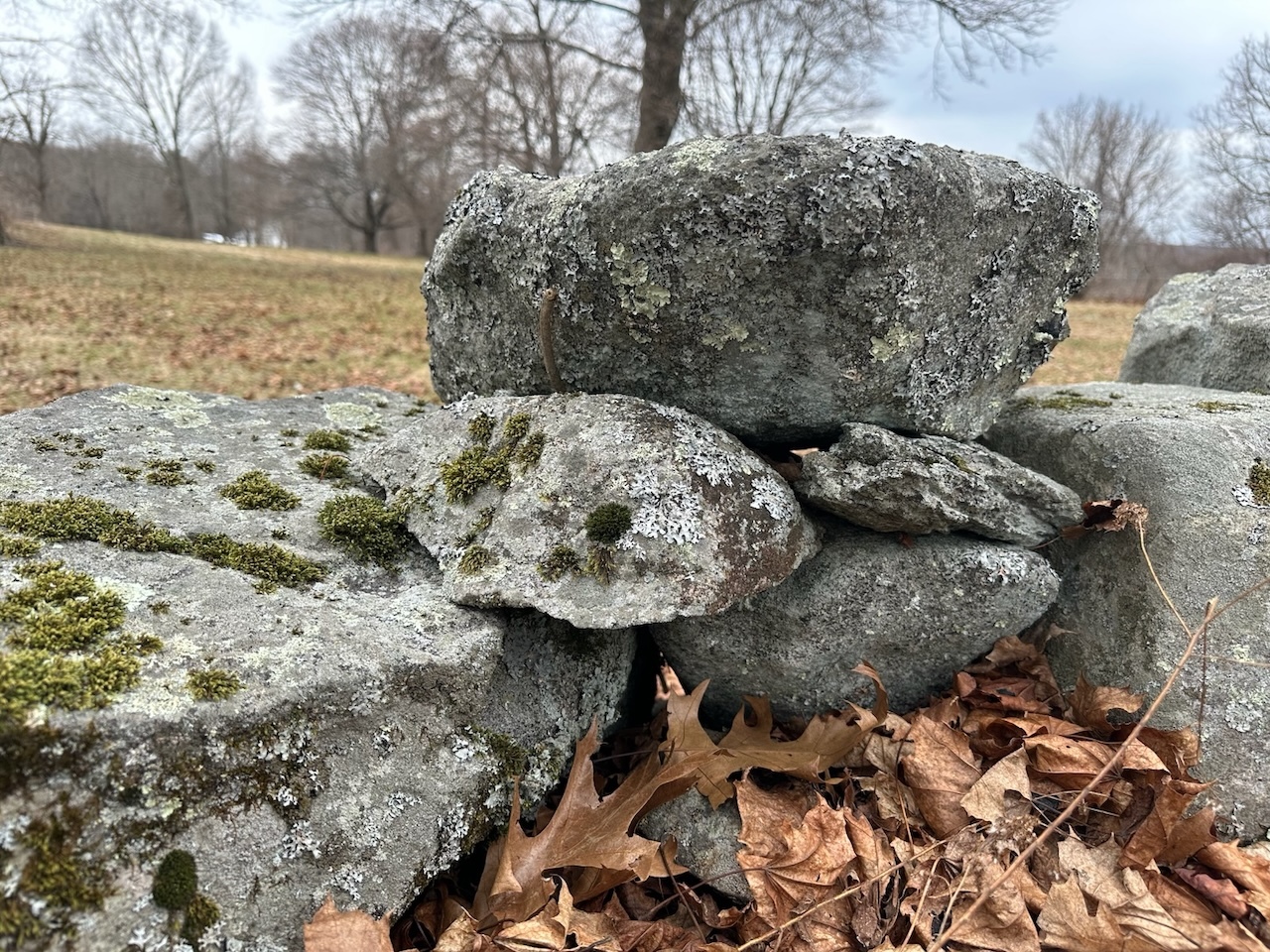
How has this month been going? I woke up to spring and didn't even realize. It looks the part: the occasional crocus, a faint fluff of clouds in a harebell sky. Hestia is absorbing the sun-flood from my desk. I will be celebrating the equinox with an MRI. My major accomplishment of yesterday was successfully wresting a permit from the Parking Department. I am filing a request for an intercalary year.
I can't believe I dreamed an entire opera whose closing performance by a small local outfit I was all set to attend before it was canceled at the last unavoidable minute. It was a Gian Carlo Menotti from 1948 and had never before received a Boston premiere. I had read its libretto for years because it was full of sand and sea-haunting: No body that presses its mouth to the shore closer than your mouth to mine. No eye that fades into the haze of the sun more fixed than your eye to mine. No ship of a letter that crosses the seas faster than my hand to yours, unless it has foundered, unless it has torn on the black rocks of the heart. It had one of his terse, enigmatic titles, The Visitor. The company that had put it up was called Marmalade and Gold, an allusion whose meaning did not escape the event horizon of waking, and specialized in bare-bones, slightly more than concert performances of oddities or undeserved obscurities of the twentieth-century opera world: I remember perusing the catalogue of previous seasons on their website and approving of their choices, all of which I suspect of not existing outside of the hour or so I was asleep. Erich Wolfgang Korngold did write a bunch of operas, mostly before—very popular choice—leaving Germany, but I do not believe a 1932 Der lahme König was among them. I am having a terrible week for which the external world offers nothing in the way of respite and even if I didn't get to hear any of its music, I appreciate the inside of my head attempting to furnish a break of art.
For Saint Patrick's Day, I had a foreign body removed from my eye and was immunologically shot in the shoulder. Who needs booze?


The wall-to-wall crowd of the memorial from which I have just returned testifies to the love poured out and returned by the guest of honor, but I would still rather have been in the worldline where they were present to be celebrated in more than memory.
It is the dozenth birthday of Hestia Hermia Linsky-Noyes, lhude sing meaw! We sang to her after midnight. She ate eagerly of her festive ham. She has spent the afternoon in the pursuit of Bird Theater. I remember her brother under that same light. Bast smiled when our cats were born.


Whatever passes for my health these days has tipped over onto the sidewalk, but my afternoon which contained far too much communication with doctors on far too little sleep was measurably improved by the discovery of Avalon Emerson's "Don't Be Seen with Me" (2025). I think of Oppenheimer Analysis as so extremely niche in appeal that it almost never crossed my mind that anyone would cover one of their songs, much less drench it in heart-racing, echo-dragged dream-pop like a night drive high on the endless windshield slide of light. I still prefer the colder, dryer original with its relentlessly weird garbage-can drum programming and glitteringly nervy columns of synths against which the vocals sound even more paranoid and plaintive, but just the fact that someone else went for their own version makes me happy. I suppose electronically unsettled meditations on the Manhattan Project and the Cold War have come back around into fashion.
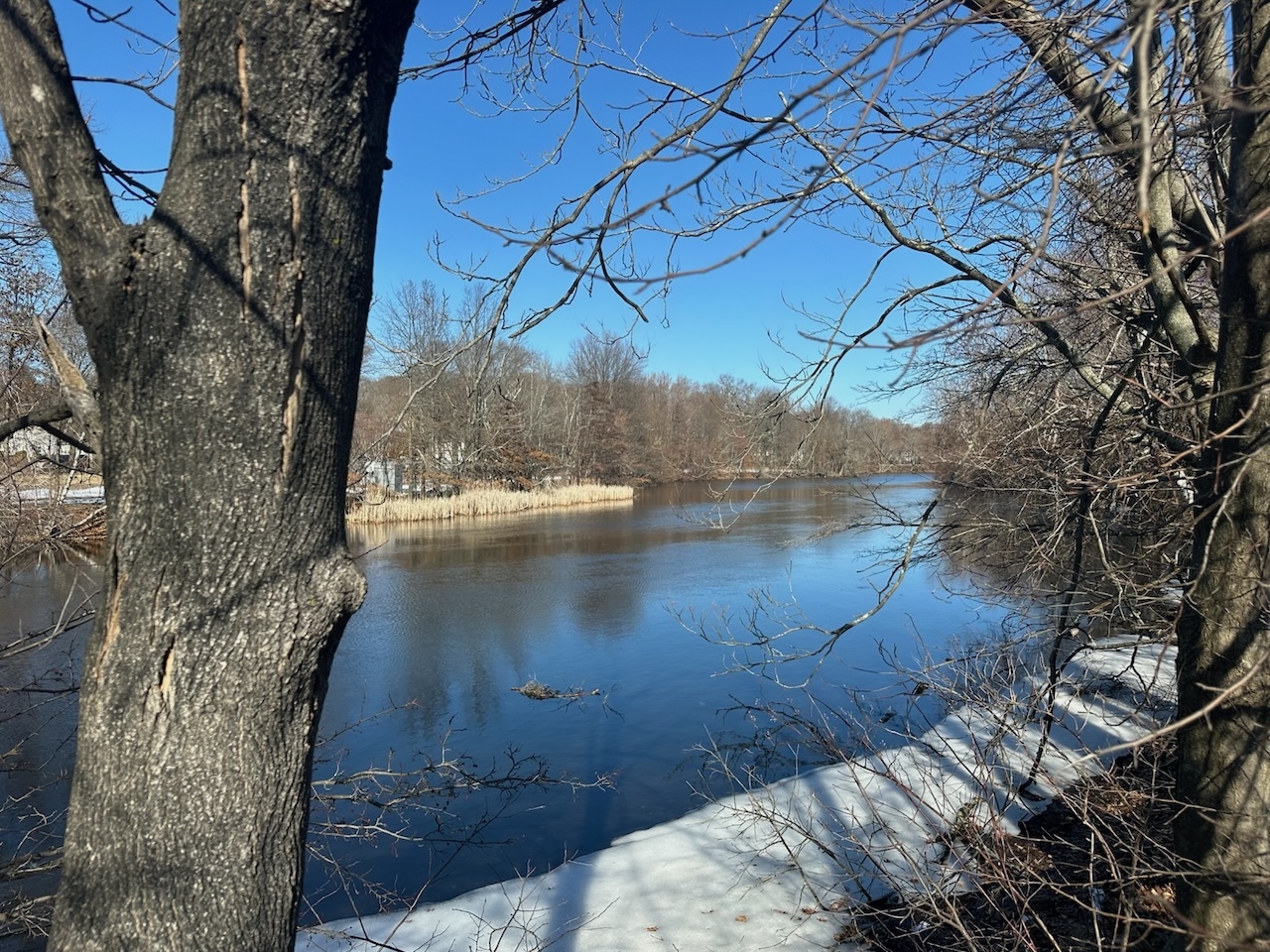
Not only is 42 °N a lousy latitude for radio astronomy, it does jack most of the year for the photosynthesis of vitamin D, but I was inspired by the summerlike spike in temperatures to walk out for groceries in a T-shirt and whatever it may or may not have done for my metabolism, it was worth the pitching over onto the couch when I got home.

No introduction to an actor may be as misleading as discovering Peter Lorre with Arsenic and Old Lace (1944), but spending much of last night sacked out in front of my longtime comfort movie of Robert Aldrich's The Flight of the Phoenix (1965) reminded me that I should probably count Richard Attenborough in a similar vein, all those weak links and bad influences his panicking debut in In Which We Serve (1942) and his nihilistic breakout in Brighton Rock (1947) set him up for. Never mind that I saw him first as the briskly competent ringleader of The Great Escape (1963), he looks much more in his ambivalent element as Lew Moran, the middle-aged navigator who may have his moral compass screwed on straightest of the sun-blistered survivors of what will become the Phoenix but little authority between his uneasy position as peacemaker and his diffidence as a drying-out drunk, even if his stammer doesn't after all stop him from going off like a firecracker on some blatantly bullheaded display of stupidity on the part of one or more of his co-leads. It would have been the second way I saw him, after which the time-shock of Jurassic Park (1993), jovial and grandfatherly and scientifically short-sighted. I'd give a lot for a record of his Sergeant Trotter in the original run of The Mousetrap. The time machine bureau is going to cut me off.
No introduction to an actor may be as misleading as discovering Peter Lorre with Arsenic and Old Lace (1944), but spending much of last night sacked out in front of my longtime comfort movie of Robert Aldrich's The Flight of the Phoenix (1965) reminded me that I should probably count Richard Attenborough in a similar vein, all those weak links and bad influences his panicking debut in In Which We Serve (1942) and his nihilistic breakout in Brighton Rock (1947) set him up for. Never mind that I saw him first as the briskly competent ringleader of The Great Escape (1963), he looks much more in his ambivalent element as Lew Moran, the middle-aged navigator who may have his moral compass screwed on straightest of the sun-blistered survivors of what will become the Phoenix but little authority between his uneasy position as peacemaker and his diffidence as a drying-out drunk, even if his stammer doesn't after all stop him from going off like a firecracker on some blatantly bullheaded display of stupidity on the part of one or more of his co-leads. It would have been the second way I saw him, after which the time-shock of Jurassic Park (1993), jovial and grandfatherly and scientifically short-sighted. I'd give a lot for a record of his Sergeant Trotter in the original run of The Mousetrap. The time machine bureau is going to cut me off.
Sit and watch my TV set
2026-03-09 20:00I have been made the unexpected recipient of an unbirthday scarf. It is patterned as if with fossil leaves and irresistibly striped.

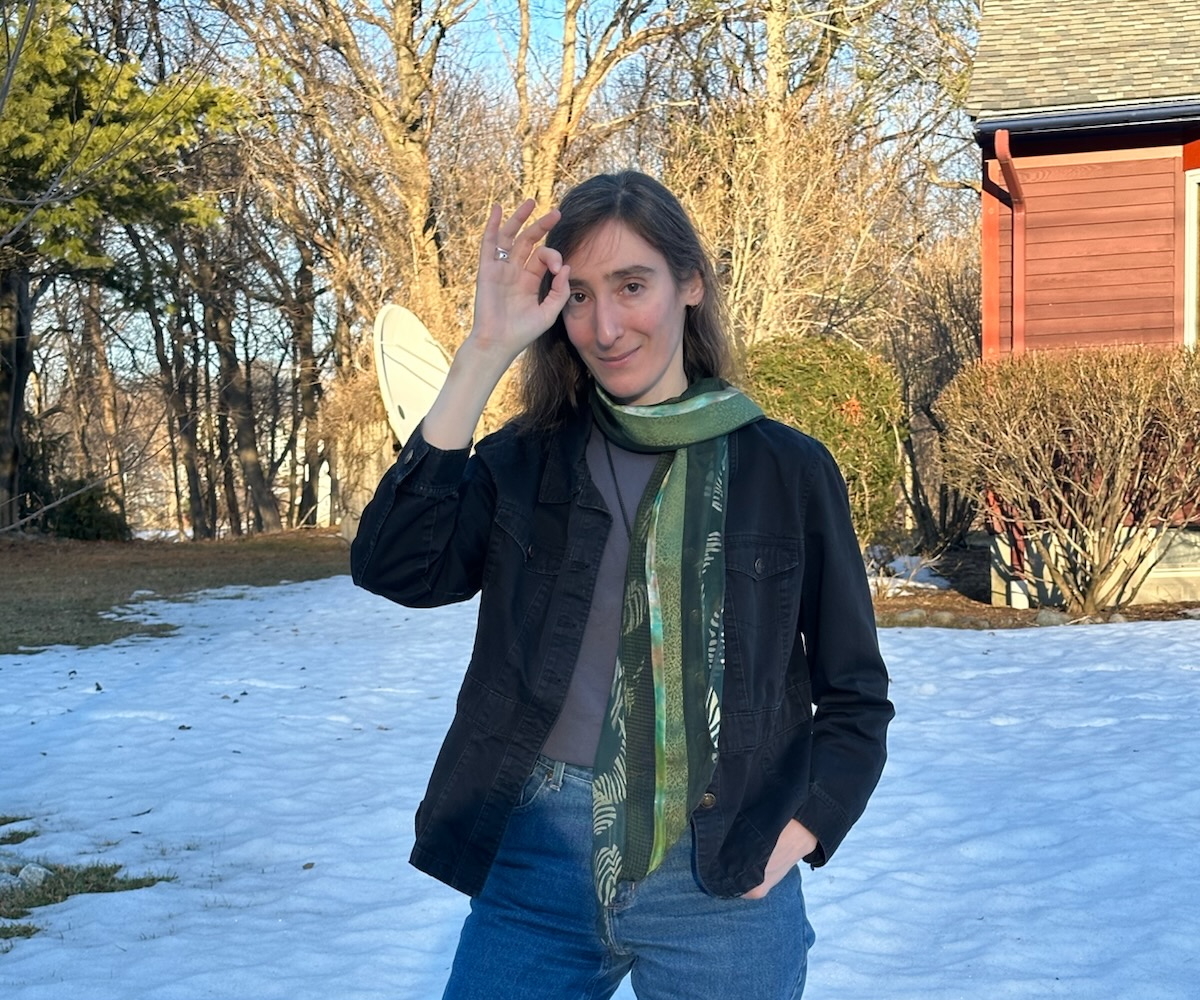
For various reasons not limited to the overhead activity of children in the mornings, last night was the first real time all week that I slept and have thus spent most of the day in a vague state of hibernation despite the warmth of the air. There was a mauve overcast around sunset that turned out to belong to a volcanic wall of gold and bougainvillea over an agate-blue cloud-band. Have some mostly musical links.
For the more than twenty years sincelesser_celery made me a CD of Peter Gabriel's Melt (1980), I have assumed that the eerily voiced French refrain of "Games Without Frontiers" was either the singer's own falsetto or pitch-shifted vocals. It turns out to be Kate Bush. I would never have identified her on my own, but then I thought about "Army Dreamers" (1980).
I grew up on Arlo Guthrie, but my favorite version of "City of New Orleans" (1971) is almost certainly Steve Goodman himself in 1970, where he reminded me unexpectedly of a Chicago-accented Stan Rogers. It's driving me nuts that I would swear the first person I heard lead "The Twentieth Century Is Almost Over" (1977) was Pete Seeger and I can't figure out where.
WERS has been playing nothing but female artists for International Women's Day, which means everything from Chaka Khan's "I'm Every Woman" (1978), Katrina and the Waves' "Walking on Sunshine" (1983), and Bikini Kill's "Rebel Girl" (1993) to Tegan and Sara's "I'll Be Back Someday" (2019), Orla Gartland's "Little Chaos" (2024), and Arlo Parks' "2SIDED" (2026). I had a moral obligation to let my father know when Rickie Lee Jones came around.
Video quality regardless,sholio's "Waking Up in Vegas" (The Greatest American Hero) remains one of my all-time favorites of their vids.
For the more than twenty years since
lesser_celery made me a CD of Peter Gabriel's Melt (1980), I have assumed that the eerily voiced French refrain of "Games Without Frontiers" was either the singer's own falsetto or pitch-shifted vocals. It turns out to be Kate Bush. I would never have identified her on my own, but then I thought about "Army Dreamers" (1980).I grew up on Arlo Guthrie, but my favorite version of "City of New Orleans" (1971) is almost certainly Steve Goodman himself in 1970, where he reminded me unexpectedly of a Chicago-accented Stan Rogers. It's driving me nuts that I would swear the first person I heard lead "The Twentieth Century Is Almost Over" (1977) was Pete Seeger and I can't figure out where.
WERS has been playing nothing but female artists for International Women's Day, which means everything from Chaka Khan's "I'm Every Woman" (1978), Katrina and the Waves' "Walking on Sunshine" (1983), and Bikini Kill's "Rebel Girl" (1993) to Tegan and Sara's "I'll Be Back Someday" (2019), Orla Gartland's "Little Chaos" (2024), and Arlo Parks' "2SIDED" (2026). I had a moral obligation to let my father know when Rickie Lee Jones came around.
Video quality regardless,
sholio's "Waking Up in Vegas" (The Greatest American Hero) remains one of my all-time favorites of their vids.For her eightieth birthday observed, we celebrated my mother with a three-tier almond cake layered with marzipan icing and raspberry and rose hip preserves, frosted in rose-toned whipped cream, and decorated with pâtes de fruits into the central one of which was socketed the candle to grow on. It looked like a charlotte russe from the Geometric period in slices. We gave her books, cards, balloons, a banner of cats, a pendant like a bronze-pronged sun of creamy golden sapphire on a leather cord. My niece ran around all day with the twins. I am not ready for Daylight Saving Time. I have enough trouble with the regular kind.


Diameter of mental blast crater not diminished. Outside is absurdly springlike following the double-tap of winter that required me to shovel my mother's car out twice, once for the unexpected four inches of snow and then for the glacial swamp the succeeding sleet turned the driveway into. In the process I seem to have inherited the Bat, the stupidest motorcycle jacket I have met in my life. It doesn't have sleeves so much as it has patagia. It is covered with snaps that open into flaps and none of them into pockets. The total design suggests that it may be so heavily constructed because otherwise in a sufficiently stiff gust of wind its owner could achieve accidental unpowered flight. It looks like an opera cape with ambitions of fetish night. My mother insisted on it because I had run out to shovel the first time in my flannel shirtsleeves and the second time my corduroy coat was obviously not adequate to the slush-fall, but it was a present to my father from my grandparents about forty years ago and it looks functionally mint because he has spent most of that time avoiding ever wearing it. In its defense, it is extremely warm and also I look like a tire. There will be no photographs.
Rabbit, rabbit! To inaugurate the spring month, it snowed flurrily all yesterday morning. This afternoon we are flooded with freezing sun. I can't believe Purim is already upon us. So many names need to be blotted out.
As of the start of the month, I seem to have had over a hundred-dollar drop in my Patreon membership without any notification of a mass die-off in subscriptions. Any suggestions on interpreting this deficit would be appreciated since it is my only steady source of income at the moment and we are so broke.
I am still feeling in something of a mental blast crater about the news. I have spent my afternoon on the phone.rushthatspeaks who also spent his afternoon on the phone is coming over and we are going to lie on the couch and complain about doctors and lawyers. And business executives.

As of the start of the month, I seem to have had over a hundred-dollar drop in my Patreon membership without any notification of a mass die-off in subscriptions. Any suggestions on interpreting this deficit would be appreciated since it is my only steady source of income at the moment and we are so broke.
I am still feeling in something of a mental blast crater about the news. I have spent my afternoon on the phone.
rushthatspeaks who also spent his afternoon on the phone is coming over and we are going to lie on the couch and complain about doctors and lawyers. And business executives.
Of his foreshortened filmography, David Farrar was right to class Cage of Gold (1950) with his three films for Powell and Pressburger. He would never again be as luscious onscreen as he had been as the louche and irresistibly uninterested Mr. Dean of Black Narcissus (1947) or even as bitterly vulnerable as the self-dodging Sammy Rice of The Small Back Room (1949), but neither had he been asked to splash out his saturnine charm like Bill Glennon, the cornucopia of post-war shadow sides who fascinates this Ealing blend of domestic and underworld noir even when it knows, like his string of cross-Channel women, better.
Even in his era's extensive catalogue of damaged veterans, Bill is a disturbing shape-shifter, a violet-eyed spiv who can sit for his medal-ribboned portrait only half ironically as "St George, World War Two." Airmen were so heroized during the war itself, it feels like an especially provocative tilt at a generation of odeon myths to leave uncomfortably open whether this decorated wing commander became a crook after the war because it damaged him too badly to settle to civvy street or whether he made such a successful flyer because he was an amoral adrenaline junkie to begin with and whether it even matters when the results either way are this gorgeous, destructive, at once worldly and immature man. "I ask about your plans, you make a joke about the atom bomb." He romances the gamine artist of Jean Simmons' Judith Murray in a whirl of air shows and nights on the town as if incarnating the RAF-struck fantasies of her adolescence and leashes the cosmopolitan chanteuse of Madeleine Lebeau's Marie Jouvet with a bluntly demon lover's alternation of vanishing acts and the most incredible sex. The jeweled wristwatch that circulates among them does more than symbolize his inconstant attentions, it underscores his loose-ended opportunism, the streak of nihilism in his pleasure-seeking that can distract itself mid-scheme with a tastier prospect and cut and run from either at a moment's expedience. "Sweetheart, to live you have to have money. If your only trade is shooting down aeroplanes, you have to make it the best way you can." In the age of the welfare state, he's a creature of the unrepentant war, inseparable from its reckless glamour and threat: James Donald as the romantically second-run Dr. Alan Kearn labors with thankless conscientiousness for the future of the nascent NHS, but the blackout dazzle of Bill never appears except out of one past or another, the repressed on a perma-return ticket. What's the Time? glowed the legend of the world clock at Piccadilly Circus underneath which he was introduced transacting some elliptically clipped business that in hindsight cannot have been remotely legit, considering that bigamy and blackmail comprise merely two of his offhand income streams. His last words which for a twist sound like true ones will reach us through the spectral double exposure of memory. Of course his talent for inconvenient reappearance includes from the dead. Farrar had such bodily presence as an actor, Bill can't be too ghostlike when his dark-tousled, tweed-slouched figure commands the most venal conversations with the look of a raffish don, but he is elusive for such a comprehensive rotter, never once given the socially soothing out of a psychological explanation or even a total write-off. Just as it would have been nicer of the film to smooth the anxieties of his criminal present by revealing a past to match, it's nastier of it to suggest that he may retain some real feeling for the woman he's improvised into a badger game, which doesn't make it untrue. "Judy and I have a thing for each other that takes some breaking. We always had. You should know that."
Cage of Gold was produced and directed by the indispensable Michael Relph and Basil Dearden and while its preoccupation with the war's ambivalent legacy could be taken to point toward the social problem cycle for which their post-war collaborations became best known, it's also a fluid and full-tilt showcase for the British noir style. The screenplay by Jack Whittingham hinges its split modes so cleverly together—a criss-cross of perspectives that could each have formed their own, more conventional crime melodrama—that the film can't help but deflate when it converts in its last fifteen minutes into a much more forthright procedural with the introduction of Bernard Lee's Inspector Gray, but until then it seems to delight in laying down one immaculately expressionist set-up after another like the surge of commuters that sluices a pair of not yet lovers into one another's fateful, Tube-crowded arms. The elfin legend of Léo Ferré accompanies the star attraction of La Cage d'Or within a self-referentially gilded set that turns by dressed-down day into a vorticist rattan of shadows. The lid of an overboiled kettle chatters like the tremble of a pistol whose barrel telescopes with the steam-shriek into the circular blare of an impatient car horn. Even locations as familiarly establishing as the Albert Bridge or the Arc de Triomphe can flip in the hard-lit lens of DP Douglas Slocombe into a luminous mews of fog or an implicitly chthonic gate, as fast as the whip-timed cutting of Peter Tanner can slam a telephone's last word on the emptily curling smoke of a suicide. An abortion is discussed as frankly as the sign in a register office wearily requests, "Confetti must not be used in these premises." The joke about the wireless that pits the Third Programme against "comics and crooners" has faded to period detail, but it still feels sharp for Judy's stomach to turn at the gleefully untouchable misdeeds of Mr. Punch. The supporting cast of Herbert Lom, Harcourt Williams, Gladys Henson, and Grégoire Aslan occasionally feel heavyweight for their screen time, but Simmons offers more than a beautiful target as her pixieish innocence slowly cools and Lebeau is stealthily less decorative than her devoted role, though the demands of reliable virtue leave Donald with little to show until he's caught polishing the prints off a crime scene. With one speculatively raked brow, Farrar dominates and he should, magnetically troubling, unresolved to the end. "She had everything I ever really wanted except money." I am in the wrong region for the restored Blu-Ray, but it's not unwatchable on the Internet Archive and certainly clearer than it looked on the former TVTime where I discovered it four years ago and it seemed to have been heavily stepped on. Even so, not unlike its antihero, it haunted me. This thing brought to you by my wanted backers at Patreon.
Even in his era's extensive catalogue of damaged veterans, Bill is a disturbing shape-shifter, a violet-eyed spiv who can sit for his medal-ribboned portrait only half ironically as "St George, World War Two." Airmen were so heroized during the war itself, it feels like an especially provocative tilt at a generation of odeon myths to leave uncomfortably open whether this decorated wing commander became a crook after the war because it damaged him too badly to settle to civvy street or whether he made such a successful flyer because he was an amoral adrenaline junkie to begin with and whether it even matters when the results either way are this gorgeous, destructive, at once worldly and immature man. "I ask about your plans, you make a joke about the atom bomb." He romances the gamine artist of Jean Simmons' Judith Murray in a whirl of air shows and nights on the town as if incarnating the RAF-struck fantasies of her adolescence and leashes the cosmopolitan chanteuse of Madeleine Lebeau's Marie Jouvet with a bluntly demon lover's alternation of vanishing acts and the most incredible sex. The jeweled wristwatch that circulates among them does more than symbolize his inconstant attentions, it underscores his loose-ended opportunism, the streak of nihilism in his pleasure-seeking that can distract itself mid-scheme with a tastier prospect and cut and run from either at a moment's expedience. "Sweetheart, to live you have to have money. If your only trade is shooting down aeroplanes, you have to make it the best way you can." In the age of the welfare state, he's a creature of the unrepentant war, inseparable from its reckless glamour and threat: James Donald as the romantically second-run Dr. Alan Kearn labors with thankless conscientiousness for the future of the nascent NHS, but the blackout dazzle of Bill never appears except out of one past or another, the repressed on a perma-return ticket. What's the Time? glowed the legend of the world clock at Piccadilly Circus underneath which he was introduced transacting some elliptically clipped business that in hindsight cannot have been remotely legit, considering that bigamy and blackmail comprise merely two of his offhand income streams. His last words which for a twist sound like true ones will reach us through the spectral double exposure of memory. Of course his talent for inconvenient reappearance includes from the dead. Farrar had such bodily presence as an actor, Bill can't be too ghostlike when his dark-tousled, tweed-slouched figure commands the most venal conversations with the look of a raffish don, but he is elusive for such a comprehensive rotter, never once given the socially soothing out of a psychological explanation or even a total write-off. Just as it would have been nicer of the film to smooth the anxieties of his criminal present by revealing a past to match, it's nastier of it to suggest that he may retain some real feeling for the woman he's improvised into a badger game, which doesn't make it untrue. "Judy and I have a thing for each other that takes some breaking. We always had. You should know that."
Cage of Gold was produced and directed by the indispensable Michael Relph and Basil Dearden and while its preoccupation with the war's ambivalent legacy could be taken to point toward the social problem cycle for which their post-war collaborations became best known, it's also a fluid and full-tilt showcase for the British noir style. The screenplay by Jack Whittingham hinges its split modes so cleverly together—a criss-cross of perspectives that could each have formed their own, more conventional crime melodrama—that the film can't help but deflate when it converts in its last fifteen minutes into a much more forthright procedural with the introduction of Bernard Lee's Inspector Gray, but until then it seems to delight in laying down one immaculately expressionist set-up after another like the surge of commuters that sluices a pair of not yet lovers into one another's fateful, Tube-crowded arms. The elfin legend of Léo Ferré accompanies the star attraction of La Cage d'Or within a self-referentially gilded set that turns by dressed-down day into a vorticist rattan of shadows. The lid of an overboiled kettle chatters like the tremble of a pistol whose barrel telescopes with the steam-shriek into the circular blare of an impatient car horn. Even locations as familiarly establishing as the Albert Bridge or the Arc de Triomphe can flip in the hard-lit lens of DP Douglas Slocombe into a luminous mews of fog or an implicitly chthonic gate, as fast as the whip-timed cutting of Peter Tanner can slam a telephone's last word on the emptily curling smoke of a suicide. An abortion is discussed as frankly as the sign in a register office wearily requests, "Confetti must not be used in these premises." The joke about the wireless that pits the Third Programme against "comics and crooners" has faded to period detail, but it still feels sharp for Judy's stomach to turn at the gleefully untouchable misdeeds of Mr. Punch. The supporting cast of Herbert Lom, Harcourt Williams, Gladys Henson, and Grégoire Aslan occasionally feel heavyweight for their screen time, but Simmons offers more than a beautiful target as her pixieish innocence slowly cools and Lebeau is stealthily less decorative than her devoted role, though the demands of reliable virtue leave Donald with little to show until he's caught polishing the prints off a crime scene. With one speculatively raked brow, Farrar dominates and he should, magnetically troubling, unresolved to the end. "She had everything I ever really wanted except money." I am in the wrong region for the restored Blu-Ray, but it's not unwatchable on the Internet Archive and certainly clearer than it looked on the former TVTime where I discovered it four years ago and it seemed to have been heavily stepped on. Even so, not unlike its antihero, it haunted me. This thing brought to you by my wanted backers at Patreon.

