
![[personal profile]](https://www.dreamwidth.org/img/silk/identity/user.png)


You don't have to fly into the sun
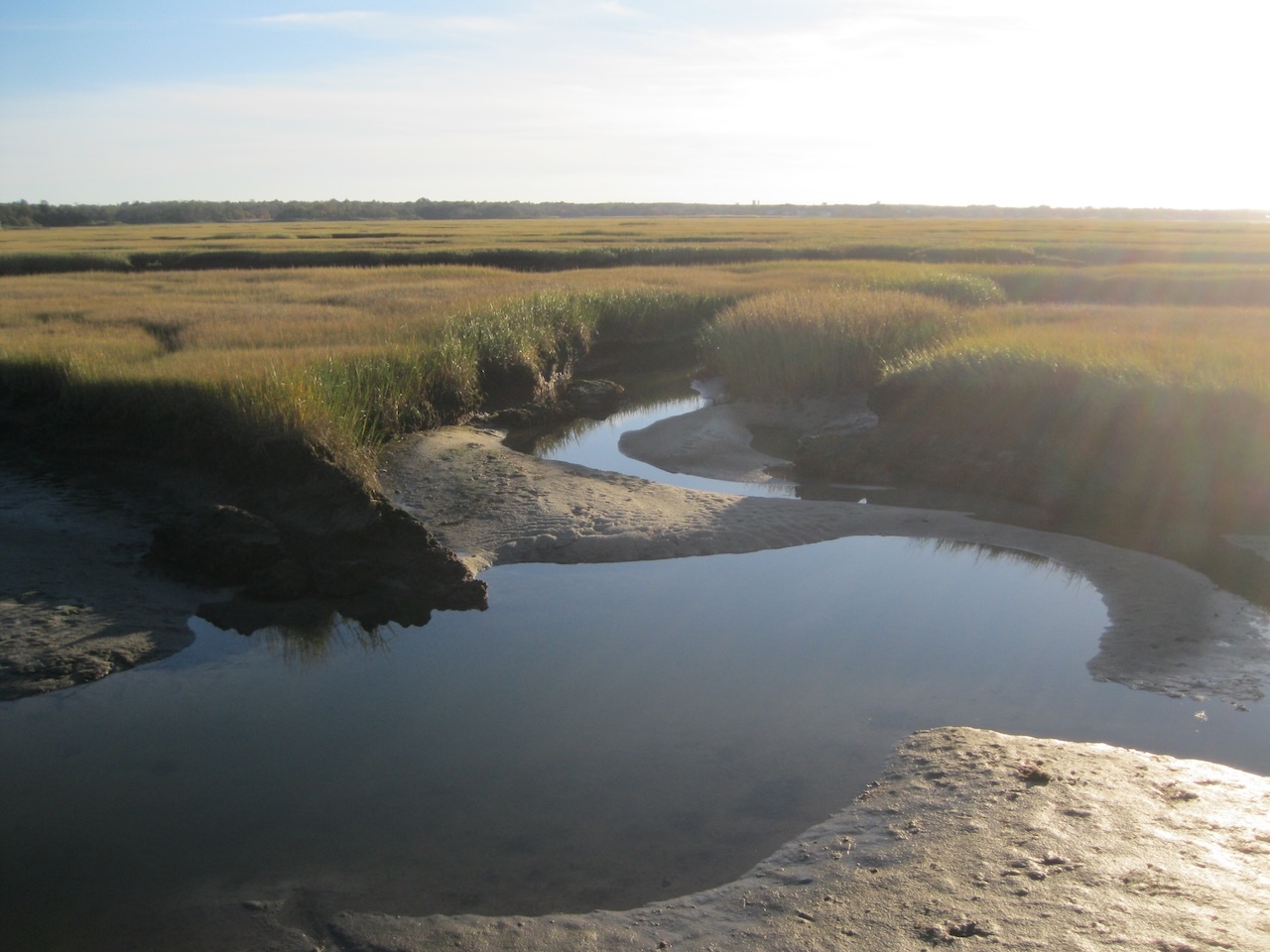
Having somewhat wiped out my reserves with the glories of Corporation Beach, I only made it out to the salt marsh for about an hour between low tide and sunset, which was still great. I saw the copper-glaze glint of fiddler crabs in their burrows in the crenellated banks of mud. I saw the dark-fringed silhouette of an osprey sailing over the green-rusted brushes of cordgrass and salt hay, where they nest with the encouragement of the Callery Darling Conservation Area which includes the wetlands around the Bass Hole Boardwalk. The engine noise floating over from Chapin Beach turned out to belong to a powered paraglider who so annoyed me by effectively buzzing the boardwalk that I let all the other sunset viewers with their phones out enthusiastically take pictures of him. The long-billed, long-legged, unfamiliarly tuxedo-patterned shorebird stalking the deeper edges of a sandbar looks to have been a vagrant black-necked stilt. With the tide so far out, I am afraid there was little chance of another seal.

I had not visited this salt marsh for five and a half years and it was low tide then, too. I still love it.

I saw it for the first time inaccessibly, when these sandbars were an inlet, summer-combed green.

I liked the shadows of the pilings thrown long by autumn and approaching sunset, some looking like ghosts already.

I have no real idea of the identity of the tiny fish that swarmed under the surface of the slowly filling channels. They looked like a squiggle of elvers and were probably Atlantic silversides.

I can never use my favorite color as a challenge question since it is too obviously and publicly green.

I got into the geometries of the boardwalk.

And the evanescence of some of its inhabitants.

As a self-portrait, a total strikeout, raccoon-masked by my own handheld shadow, and I like it because I am having such a good time.

The camera did not comply entirely, but it was the ruffs of red weed around the bases of the pilings with their barnacle-plating above.

The boardwalk used to reach across Clay's Creek, but I am informed that it was never rebuilt after the wear and tear of several storms took the additional span out, partly because it was getting in the way of tern conservation.

The rucks and ripples of the sandbar made the water in the late light look like a mirage.

Ashore, I saw the sunset through a berried juniper screen.
After which I ate dinner, read a little, and passed out for about an hour and a half. Family and friends have been sending me pictures of No Kings, the necessity of which I hate and the turnout of which I cheer. My mother told me about her favorite sign she did not carry: a photograph of the butterfly, the only orange monarch we need. I loved everything about the spare, specific exploration of marginalized languages and historical queerness in Carys Davies' Clear (2024) until the slingshot of the ending as if the author had lost a chapter somewhere over the side in the North Sea. Since the Cape is still autumnal New England, I am drinking mulled cider.
I had not visited this salt marsh for five and a half years and it was low tide then, too. I still love it.

I saw it for the first time inaccessibly, when these sandbars were an inlet, summer-combed green.

I liked the shadows of the pilings thrown long by autumn and approaching sunset, some looking like ghosts already.

I have no real idea of the identity of the tiny fish that swarmed under the surface of the slowly filling channels. They looked like a squiggle of elvers and were probably Atlantic silversides.

I can never use my favorite color as a challenge question since it is too obviously and publicly green.

I got into the geometries of the boardwalk.

And the evanescence of some of its inhabitants.

As a self-portrait, a total strikeout, raccoon-masked by my own handheld shadow, and I like it because I am having such a good time.

The camera did not comply entirely, but it was the ruffs of red weed around the bases of the pilings with their barnacle-plating above.

The boardwalk used to reach across Clay's Creek, but I am informed that it was never rebuilt after the wear and tear of several storms took the additional span out, partly because it was getting in the way of tern conservation.

The rucks and ripples of the sandbar made the water in the late light look like a mirage.

Ashore, I saw the sunset through a berried juniper screen.
After which I ate dinner, read a little, and passed out for about an hour and a half. Family and friends have been sending me pictures of No Kings, the necessity of which I hate and the turnout of which I cheer. My mother told me about her favorite sign she did not carry: a photograph of the butterfly, the only orange monarch we need. I loved everything about the spare, specific exploration of marginalized languages and historical queerness in Carys Davies' Clear (2024) until the slingshot of the ending as if the author had lost a chapter somewhere over the side in the North Sea. Since the Cape is still autumnal New England, I am drinking mulled cider.
no subject
no subject
Thank you! The whole thing looked like that, sculptured islands. I love tidal marshes.