


Talking to the poets, telling them your name
Prompted, I assume, by the five minutes of Absolute Hell (1991) I watched last night on ![[personal profile]](https://www.dreamwidth.org/img/silk/identity/user.png) rydra_wong's recommendation, I dreamed of watching some nonexistent television featuring Bill Nighy. He was playing one of M. John Harrison's indescribably seedy urban magicians: I really minded the adaptation not existing when I woke. He was perfect.
rydra_wong's recommendation, I dreamed of watching some nonexistent television featuring Bill Nighy. He was playing one of M. John Harrison's indescribably seedy urban magicians: I really minded the adaptation not existing when I woke. He was perfect.
I continue to feel that my intelligence has been siphoned out through my alveoli, but I got out for a walk withspatch before the afternoon clouded over, the elm leaves were sun-translucent green and the dogwood next door is flowering in two colors, and I have a new shirt which I believe is meant for going to the beach in. I am reading Christianna Brand's Green for Danger (1944) and enjoying it very much despite its dissimilarities to the 1946 film version which I encountered first. Since I own a couple of her art books, I don't think of her as having vanished as fully as it seems she did from the perspective of Hollywood and TV, but this is a nice article about Wendy Froud.

rydra_wong's recommendation, I dreamed of watching some nonexistent television featuring Bill Nighy. He was playing one of M. John Harrison's indescribably seedy urban magicians: I really minded the adaptation not existing when I woke. He was perfect.I continue to feel that my intelligence has been siphoned out through my alveoli, but I got out for a walk with
spatch before the afternoon clouded over, the elm leaves were sun-translucent green and the dogwood next door is flowering in two colors, and I have a new shirt which I believe is meant for going to the beach in. I am reading Christianna Brand's Green for Danger (1944) and enjoying it very much despite its dissimilarities to the 1946 film version which I encountered first. Since I own a couple of her art books, I don't think of her as having vanished as fully as it seems she did from the perspective of Hollywood and TV, but this is a nice article about Wendy Froud.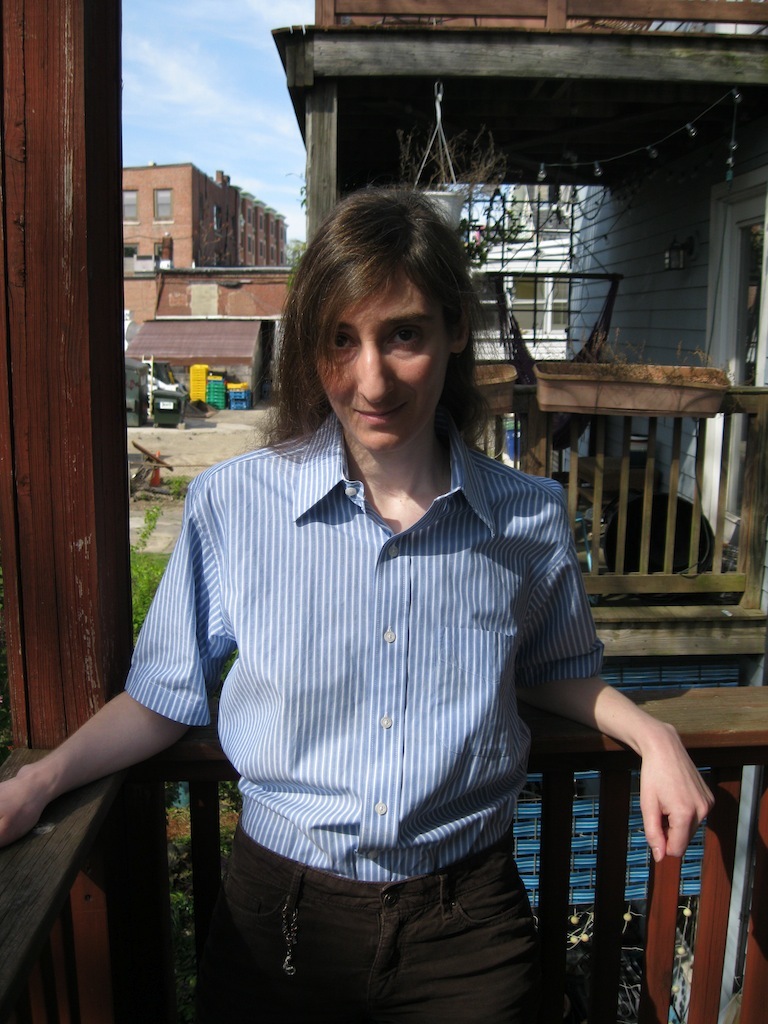
no subject
He's so complimentary about her in the introduction to this edition of Green for Danger, I would never have guessed!
"The book's strength owes much to the impressive plot and interesting characterisation, but also a good deal to Christianna Brand's compelling evocation of life in England at a time of national crisis . . . Opinions vary as to which novel is her masterpiece; this book is my personal choice."
Now that you have told me that he describes the plots right up to the point of suspense but no further, I couldn't help noticing he did it in the introduction, too.
Which, conversely, had the effect of making me want to read a bunch more brand.
Of the three and a half novels of hers I have read so far, Green for Danger is definitely the strongest, although as a collection of characterizations I really enjoyed London Particular (1952). Death in High Heels (1941) is very obviously the kind of first novel where the author learned to write a novel in the process and Heads You Lose (1941) interested me most for its handling of its Jewish character and its full bore WTF. I am coming to the conclusion that in every one of her novels Brand dumps a bucket of red herrings over the reader's head, the only consolation being that the characters get splashed also.