


But you can't do things on the cheap, now can you, when you're in society?
Too much of my afternoon was spent on the phone with bureaucracy, but just before sunset ![[personal profile]](https://www.dreamwidth.org/img/silk/identity/user.png) a_reasonable_man came around and we had a very nice socially distanced walk, this time with more water.
a_reasonable_man came around and we had a very nice socially distanced walk, this time with more water.

I feel good about remembering correctly that the Arlington Reservoir is a man-made rather than natural pond—another nineteenth-century terraforming project—but I had forgotten that its water comes from Munroe Brook and it's part of the same watershed as the Great Meadows due to feeding Mill Brook in turn.

The more I find out about the places I grew up in, the more I feel for Jonathan in Diana Wynne Jones' A Tale of Time City (1987), covering for not knowing an important part of his own city's myth-history by saying in his most lordly manner, "If you live in this place, you leave the Gnomon for tourists."

I knew at least that the cloud-reflections looked like drifts of sand under the water.

We walked a parallel trail to the one I took yesterday, narrower and less official, no brook alongside. We passed one dog-walker. The light was fading too fast for most of the trees to come out as anything but dry-leafed dimness, but this sky-climbing tangle had personality.

We made it to the margins of the Meadows just before we had to turn back for the time. It was nothing more than a silhouette in the westering light, but something went overhead that held its legs together like a heron or an egret. Birches look like ghosts wherever they spring.

One scratchy sentinel sunset tree.

One sunset horizon. I tried afterward for pictures of Venus, Mars, Saturn and Jupiter, but I think I am going to need a camera that listens to me about shutter speeds.
Like everyone else who reads and has opinions, I am used to running into literary conventions that run directly counter to mine, but while reading Leonard Gribble's The Arsenal Stadium Mystery (1939) I had to take a second for reasons that had nothing to do with the usual period sexism, anti-Semitism etc. The detective inspector's sergeant is describing the murder victim, a half-back for the fictional amateur team of the Trojans: "I bet this bird never knew what was happening to him, though he looks the kind that might have asked for trouble. Dark hair, bit effeminate in features, well built. But mouth too thin, eyes a bit too close together—" and of course it's not meant to be an approving description and indeed in his brief pre-mortem cameo the character comes off as a talented jerk, but I still bet that in three dimensions I'd have thought he had an interesting face.
a_reasonable_man came around and we had a very nice socially distanced walk, this time with more water.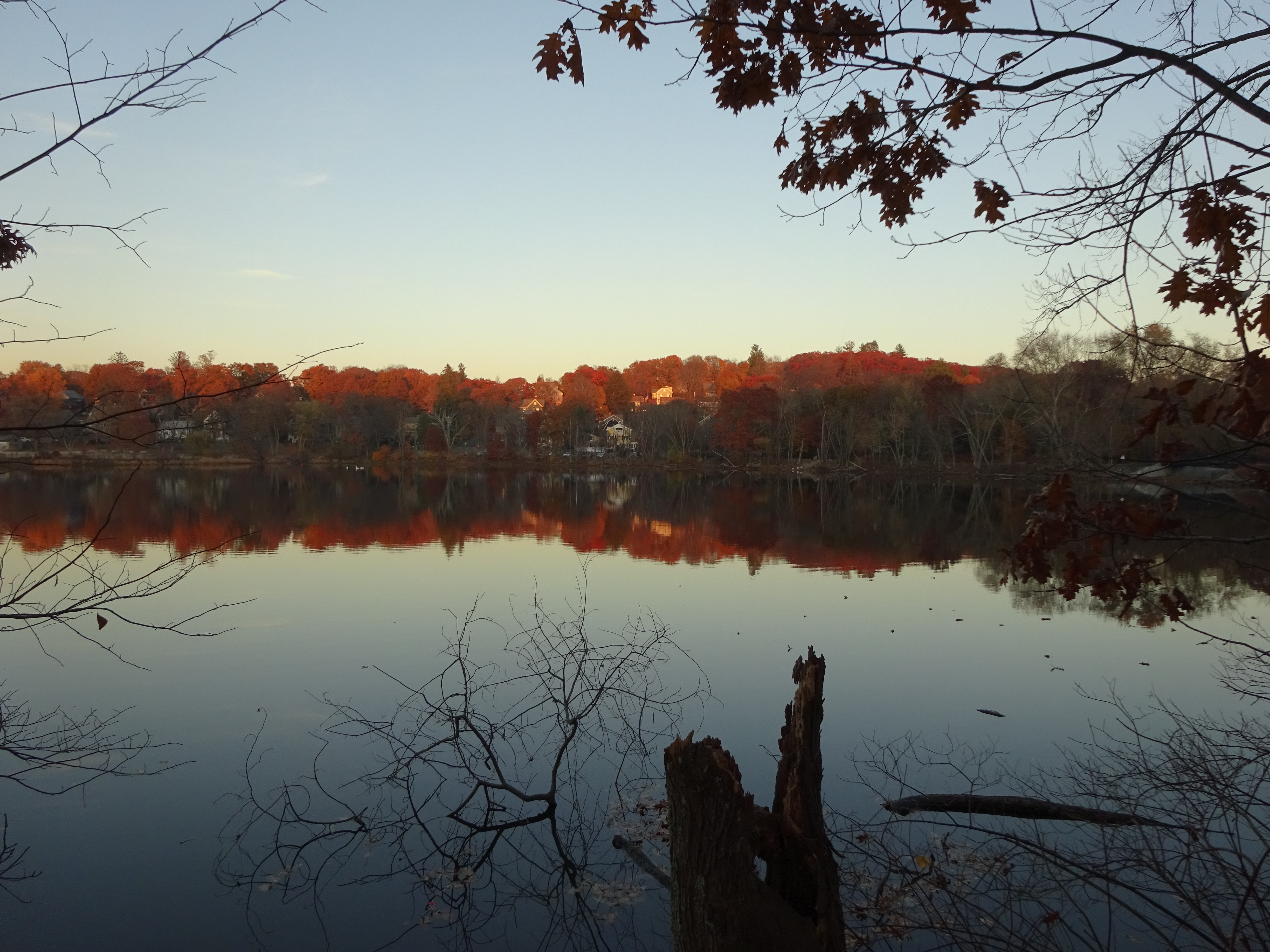
I feel good about remembering correctly that the Arlington Reservoir is a man-made rather than natural pond—another nineteenth-century terraforming project—but I had forgotten that its water comes from Munroe Brook and it's part of the same watershed as the Great Meadows due to feeding Mill Brook in turn.
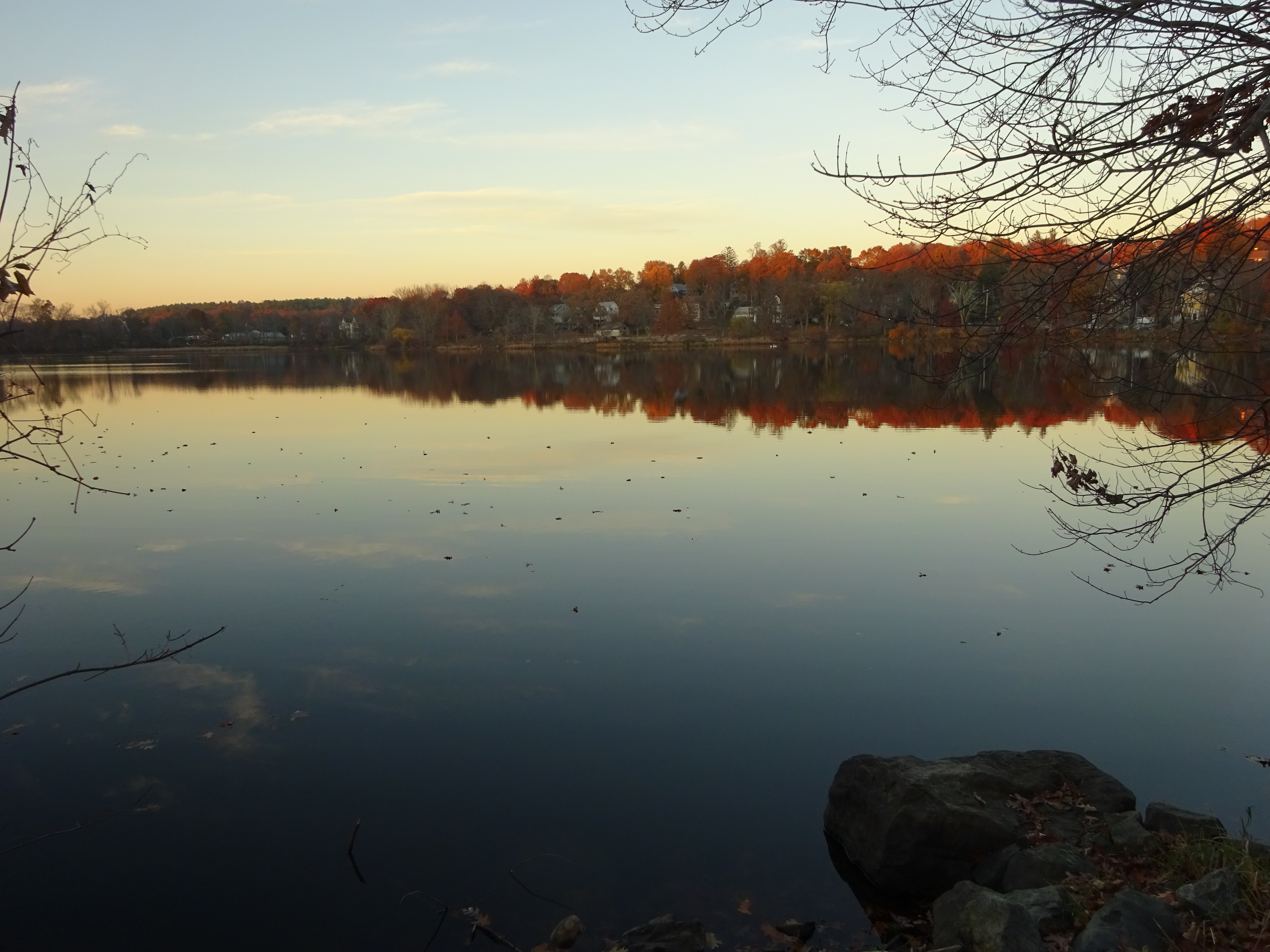
The more I find out about the places I grew up in, the more I feel for Jonathan in Diana Wynne Jones' A Tale of Time City (1987), covering for not knowing an important part of his own city's myth-history by saying in his most lordly manner, "If you live in this place, you leave the Gnomon for tourists."
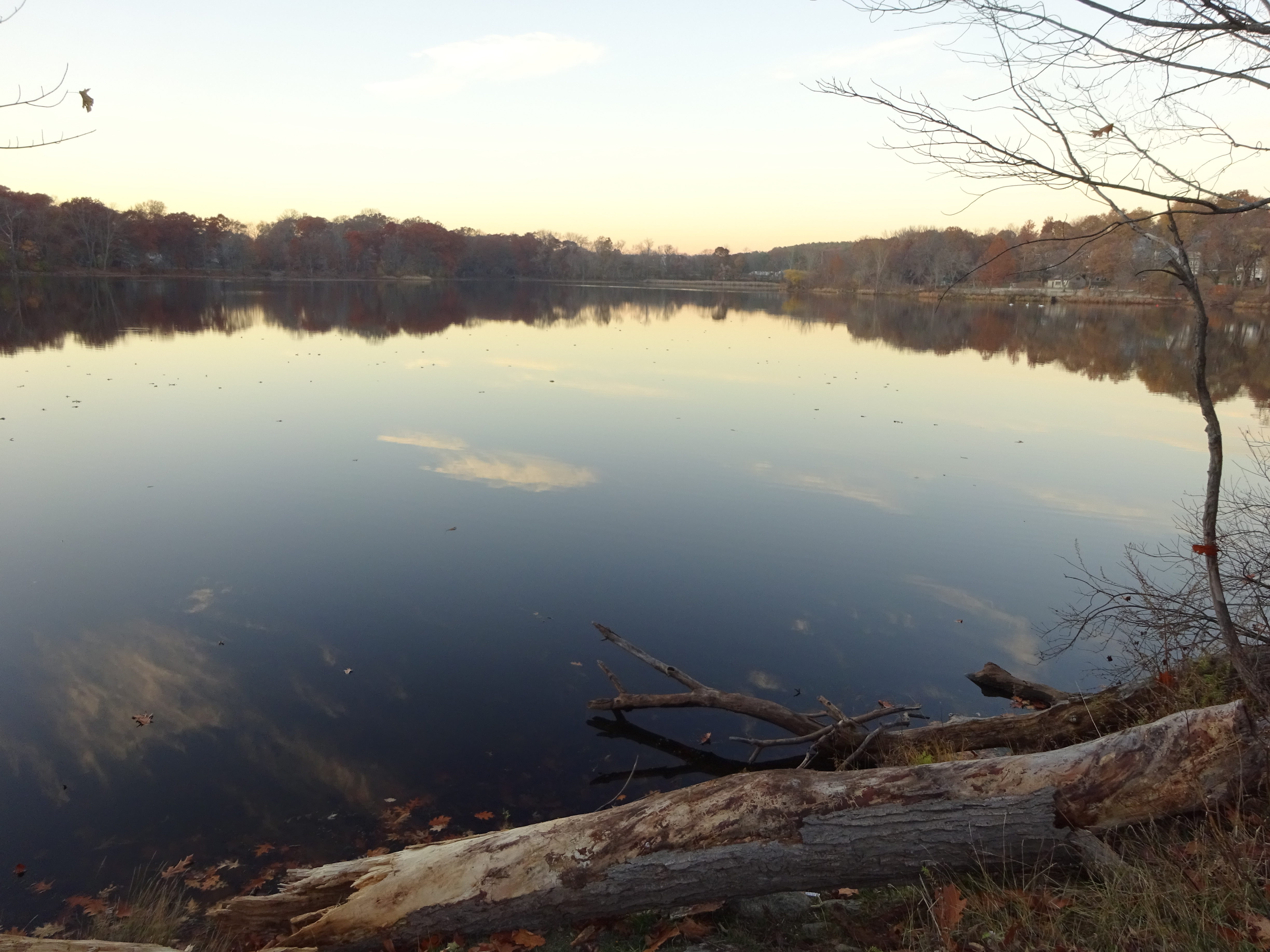
I knew at least that the cloud-reflections looked like drifts of sand under the water.
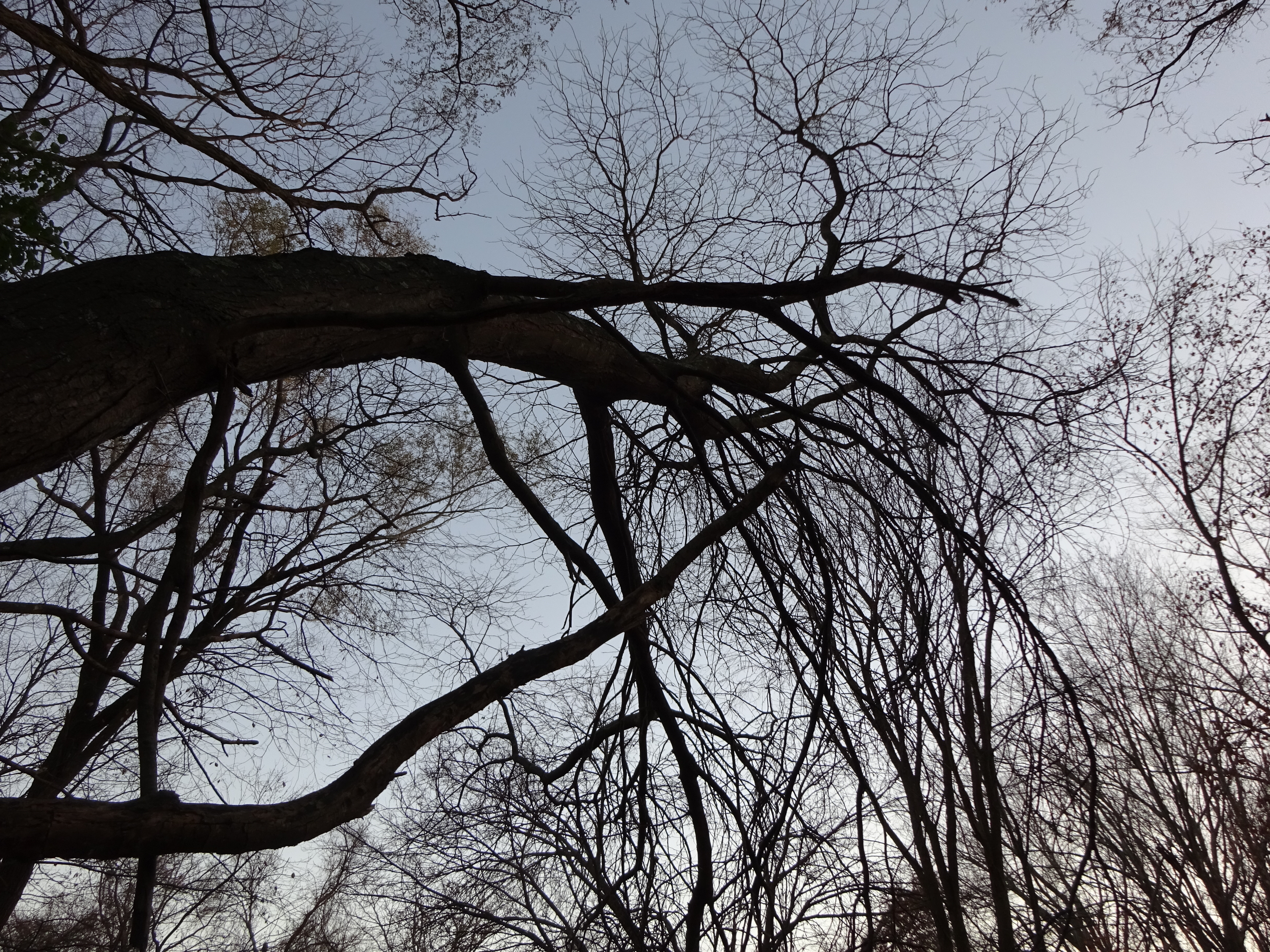
We walked a parallel trail to the one I took yesterday, narrower and less official, no brook alongside. We passed one dog-walker. The light was fading too fast for most of the trees to come out as anything but dry-leafed dimness, but this sky-climbing tangle had personality.
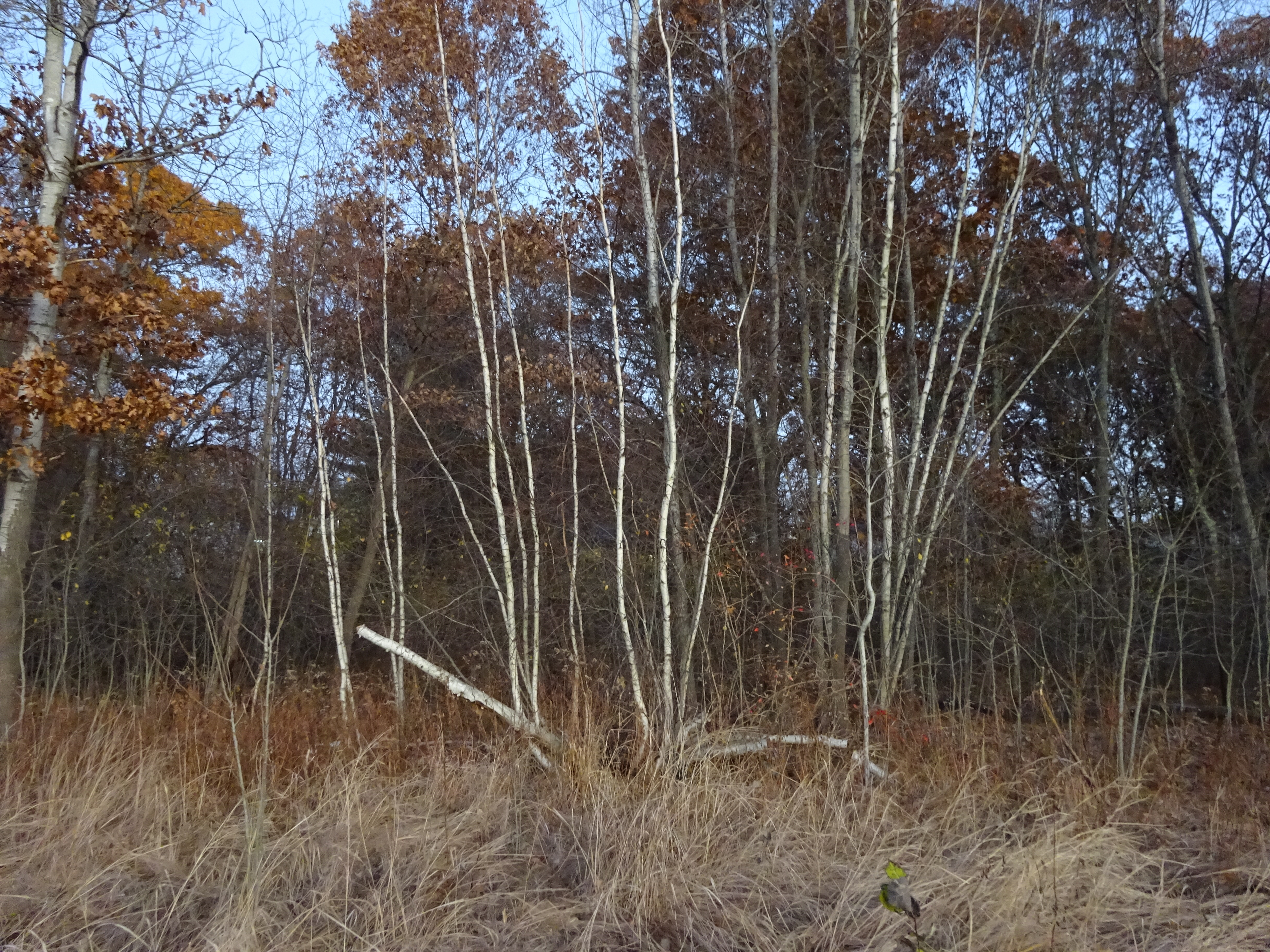
We made it to the margins of the Meadows just before we had to turn back for the time. It was nothing more than a silhouette in the westering light, but something went overhead that held its legs together like a heron or an egret. Birches look like ghosts wherever they spring.

One scratchy sentinel sunset tree.

One sunset horizon. I tried afterward for pictures of Venus, Mars, Saturn and Jupiter, but I think I am going to need a camera that listens to me about shutter speeds.
Like everyone else who reads and has opinions, I am used to running into literary conventions that run directly counter to mine, but while reading Leonard Gribble's The Arsenal Stadium Mystery (1939) I had to take a second for reasons that had nothing to do with the usual period sexism, anti-Semitism etc. The detective inspector's sergeant is describing the murder victim, a half-back for the fictional amateur team of the Trojans: "I bet this bird never knew what was happening to him, though he looks the kind that might have asked for trouble. Dark hair, bit effeminate in features, well built. But mouth too thin, eyes a bit too close together—" and of course it's not meant to be an approving description and indeed in his brief pre-mortem cameo the character comes off as a talented jerk, but I still bet that in three dimensions I'd have thought he had an interesting face.
no subject
Thank you! I am enjoying being outside!